When a person passes away, their belongings don't all follow the same path. A common misconception is that a Will or the Probate Court governs everything a person owned. In reality, the estate is divided into two distinct categories: Probate Assets and Non-Probate Assets.
Distinguishing between the two is the first step in determining how long the legal process will take — and who receives their inheritance first.
What Are Probate Assets?
Probate assets are any property owned solely by the deceased at the time of death that does not have a designated beneficiary or a right of survivorship. These assets must go through the court process — Probate or Administration — to change legal ownership.
Common examples:
- Individual bank accounts without a "Payable on Death" (POD) beneficiary
- Real estate owned solely by the decedent (or as "Tenants in Common")
- Personal property like jewelry, furniture, and vehicles
- Interests in a business or partnership
Fact check: Even if a Will says "I leave my house to my son," the house remains a probate asset because the court must legally oversee the title transfer from the deceased to the heir.
What Are Non-Probate Assets?
Non-probate assets pass automatically to a survivor or beneficiary by operation of law or by contract. These assets bypass the court process entirely — meaning they are usually available to the recipients much faster.
Common examples:
- Joint property — bank accounts or homes held as "Joint Tenants with Right of Survivorship"
- Beneficiary designations — life insurance policies, 401(k)s, and IRAs
- Trust assets — any property held in a Living Trust
- Transfer on Death (TOD) — brokerage accounts or vehicles with registered beneficiaries
Reality check: Your Will does not override a beneficiary designation. If your Will leaves everything to your spouse, but your life insurance still lists an ex-partner as the beneficiary, the insurance company is legally bound to pay the ex-partner.
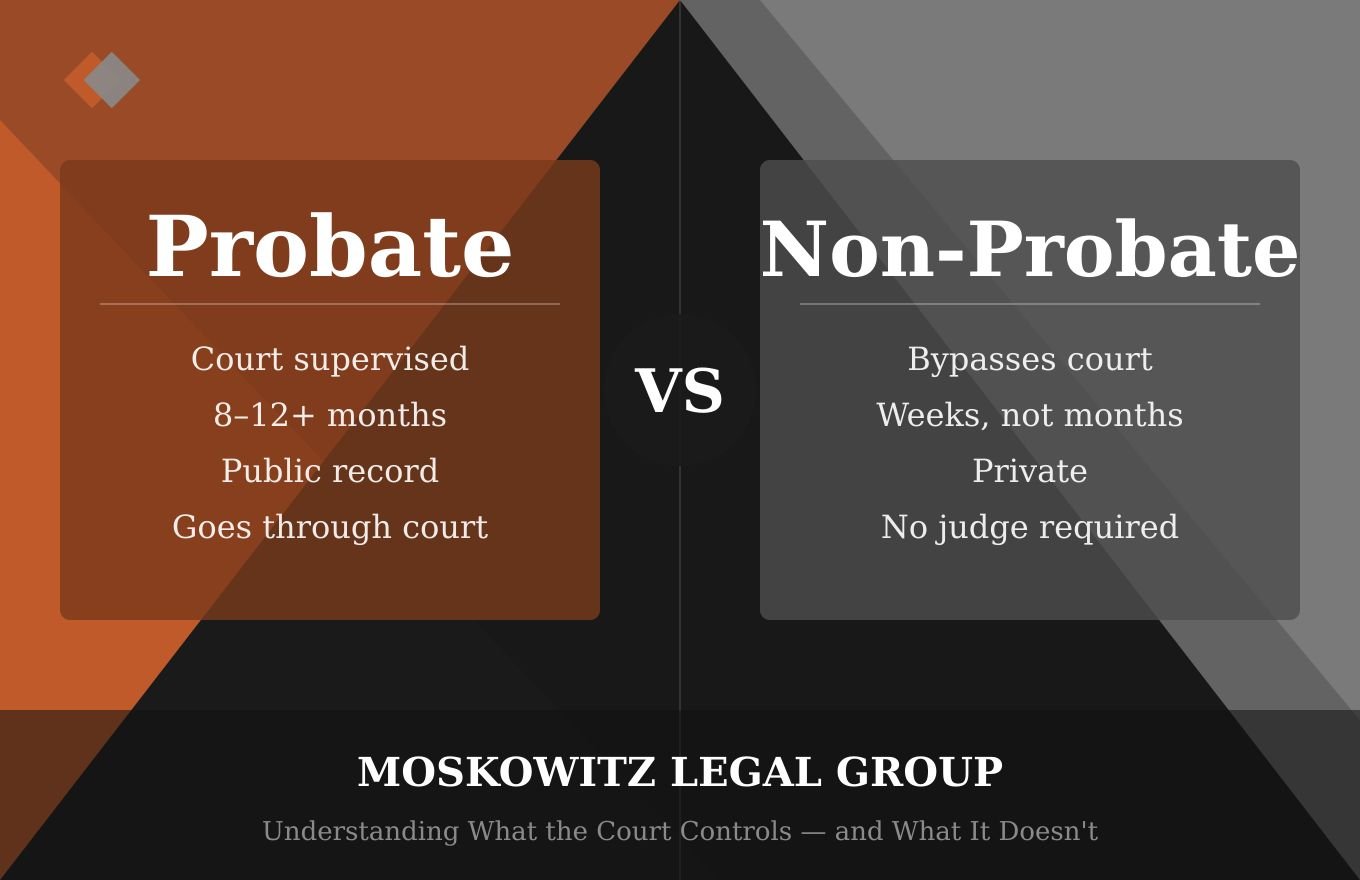
Comparison: How They Move
How to Determine the Path Forward
Before beginning the legal paperwork, ask these three questions:
- How is the asset titled? Look at bank statements and deeds. If it's in one name only, it's likely a probate asset.
- Is there a named beneficiary? Check insurance policies and retirement accounts.
- Is there a Trust? Property moved into a trust during the owner's lifetime avoids probate entirely.
Why Professional Guidance Matters
Misclassifying assets can lead to tax errors, disputes among heirs, and unnecessary delays in court. A knowledgeable probate attorney can help you map out the estate, identify which assets require court intervention, and ensure that non-probate transfers are handled correctly.
Don't navigate the complexities of estate administration alone. Protect the estate's value and your peace of mind.